


From December 22 to 28, 2023, and again from January 5 to 21, 2024, BUNDLESTUDIO will present the exhibition “Dino Gavina: A Design History of Destruction and Creation” at BUNDLE GALLERY.
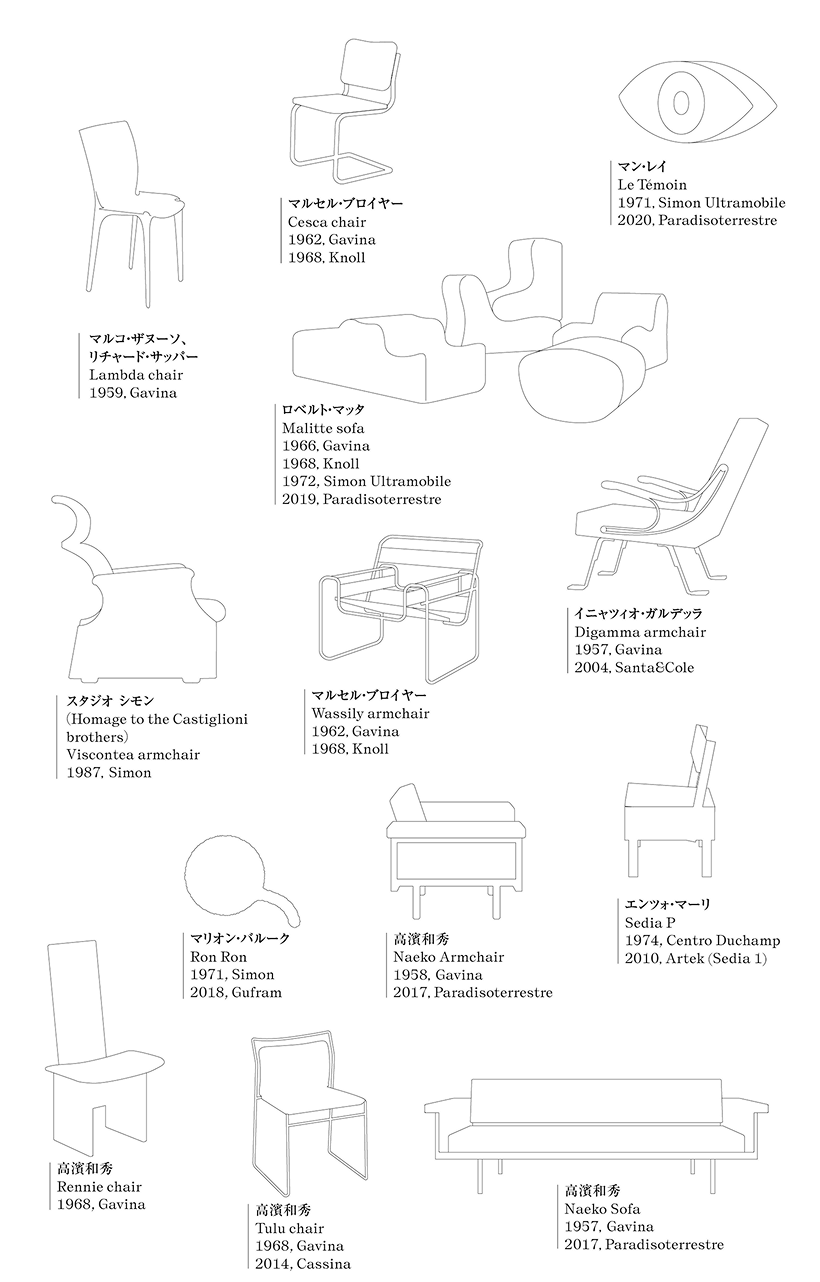
Dino Gavina was a groundbreaking figure in 20th-century design. In 1950, he began selling furniture under his own name, and in 1960, he founded the manufacturing company Gavina (later known as Simon). He introduced to the world the works of such designers as Kazuhide Takahama, Achille and Pier Giacomo Castiglioni, Ignazio Gardella, Carlo Scarpa, and Marcel Breuer. In 1962, he partnered with Cesare Cassina, founder of Cassina, to co-establish the lighting company Flos. Gavina also worked closely with artists like Man Ray and Roberto Matta, leading innovative collaborations that blended art and design, and left a lasting mark on the cultural landscape of his era. He is remembered as a visionary force in modern Italian design.
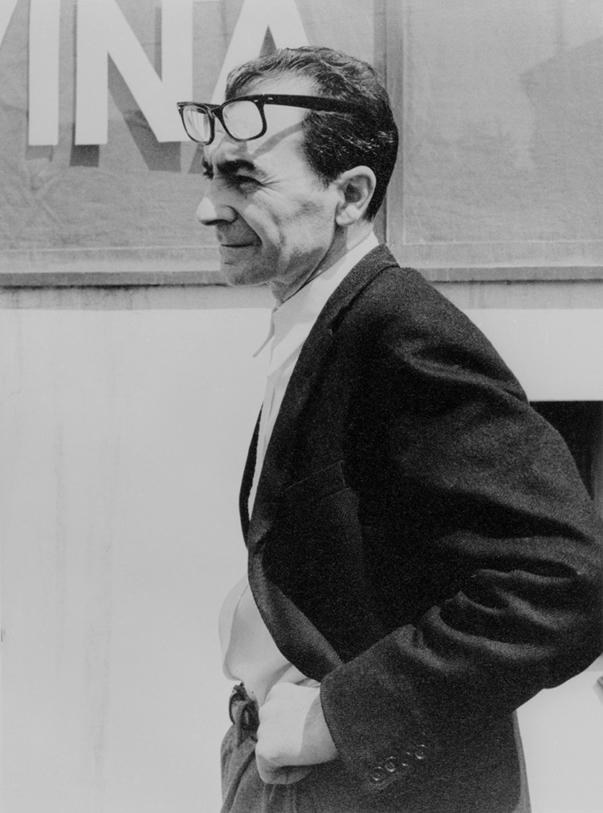
© image: Telimage, Paris
© man ray 2015 trust / adagp, Paris & jaspar, Tokyo, 2023 x0185
BUNDLESTUDIO director Masato Kawai became fascinated with Italian postwar design in the late 1990s, a time when international interest was growing in designers like Charles and Ray Eames, Jean Prouvé, and Charlotte Perriand. Kawai was especially drawn to Gavina’s work and the powerful presence of pieces inspired by artists like Man Ray, Matta, Meret Oppenheim, and Constantin Brâncuși, as well as the Ultramobile Collection. His research, including interviews after Gavina’s death, revealed key moments in Gavina’s career—such as appointing Kazuhide Takahama as lead designer after meeting him at the 1957 Milan Triennale, and collaborating with the Castiglioni brothers and Carlo Scarpa on innovative showrooms and ready-made style products. Gavina’s close relationships with figures like Marcel Duchamp and Man Ray were essential to his creative process. These discoveries inspired Kawai to bring this long-envisioned exhibition to life in Japan. Gavina’s drive, insight, and passion continue to influence the way we live and engage with design.
The exhibition will showcase and sell rare vintage pieces released by Gavina and Simon, alongside current items from today’s license holders—Cassina, Flos, Knoll, Nemo, Paradiso Terrestre, and Santa & Cole. Also featured will be two paintings and two sculptures by Lucio Fontana, the pioneering artist behind Spatialism (Spazialismo), whose impact on 20th-century art was profound. In the 1950s, Gavina visited the Milan Triennale with Fontana, an experience that helped launch his entry into the design world.
The exhibition is housed in a distinctive gallery space: a restored private residence designed in 1974 by Japanese architect Ren Shinrai, who had previously worked in Le Corbusier’s atelier. Within this architecturally rich setting, visitors can experience firsthand the bold and poetic vision of Dino Gavina—his radical spirit, human-centered thinking, and relentless drive to push boundaries.
On Exhibit

Who Was Dino Gavina?
Interview with Luca Fuso
Gavina Lives On Within Cassina
Dino Gavina and Cesare Cassina. These two entrepreneurs, who laid the foundations of Italian design, not only co-founded the lighting company Flos but were also bound by a deep friendship. In 2013, at a time when memories of Gavina’s legacy in design history were beginning to fade following his death, Cassina acquired the rights to the Simoncollection. What story lies behind this development? We asked Luca Fuso, who has served as CEO of Cassina since 2018.
How did Cesare Cassina view Dino Gavina? According to CRONACHE MINORI DALLA PERIFERIA DEL DESIGN ("Minor Chronicles from the Periphery of Design," Corraini Edizioni, 2022), a recent book by Cesare’s daughter Adele, Cesare highly regarded Dino as an enlightening entrepreneur in Italian design and a genius at scouting young talent. To Cesare, Dino was a “spiritual father,” someone who helped nurture his innate sense of intuition and was a deeply important figure in his life.
Can you share any anecdotes about the friendship between Gavina and Cassina? The two met in the early 1960s and developed a friendship through ongoing discussions and the exchange of ideas. Together, these two entrepreneurs helped initiate a pivotal shift toward modern design. Through Gavina, Cesare met emerging talents such as Afra & Tobia Scarpa, Mario Bellini, and Gaetano Pesce—figures who would go on to lay the foundations for the growth of Cassina and C&B (Cassina & Busnelli, later known as B&B Italia).
Can you tell us about the background behind their founding of Flos in 1962? They had long discussions about the direction of design and developed a strategic plan. They made the following assumption: Cassina would focus on high-quality upholstered furniture and chairs, while Gavina would handle furniture manufacturing. To complete this new concept of home interiors, they established Flos as a company for the industrial production of lighting.
What was the vision behind Cassina acquiring the rights to Simon products in 2013? This acquisition marked the convergence of two foundational narratives in Italian design. Both companies are strongly characterized by shared values: a continuous drive for experimentation and innovation, guaranteed quality in materials and production processes, the expression of a new design language, and the promotion of cultural value.
In 1964, Gavina declined a proposal to produce the furniture of Le Corbusier (as well as Pierre Jeanneret and Charlotte Perriand). How did Cassina come to acquire those rights afterward? In 1962, Gavina decided to produce Marcel Breuer’s furniture through his own company, becoming the first to reissue archive models. Two years later, Heidi Weber, who held the rights to the furniture of Le Corbusier and his collaborators, approached Gavina to propose a re-edition. But he declined, believing the furniture’s craftsmanship to be too artisanal, and introduced her to Cesare, who then acquired the rights for Cassina. These works later became the foundation of the “I Maestri” series, which launched in the 1970s with Filippo Alison.
We are pleased to see many pieces by Kazuhide Takahama—who had a deep bond with Gavina—on display at Cassina’s showroom in Japan. We feel that the furniture designed by TAKAHAMA strongly conveys a unique poetic essence through its strict discipline and essential forms. It expresses overlapping cultural symbols from both the Eastern world that shaped him and the Western world with which he deeply engaged later in life.
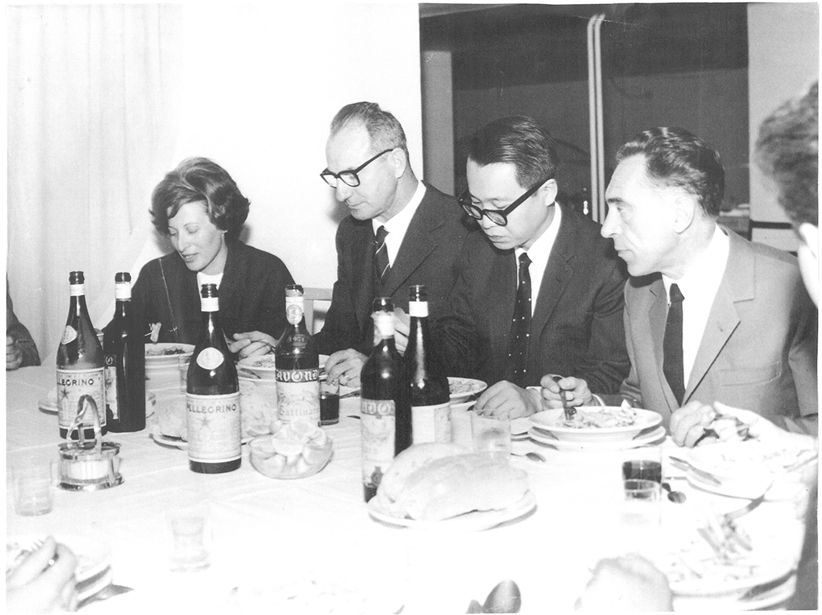
Image courtesy of Cassina ixc.
Interview with Gherardo Tonelli
Paradisoterrestre Today
“Since the dawn of civilization, humankind has contributed to the making of his earthly paradise through the artifacts shaped by their hands. Human traces mark every paradise on Earth.” —Dino Gavina
In 1983, Dino Gavina embarked on what would become his final creative venture: the launch of Paradisoterrestre("Earthly Paradise"). It was a bold move toward crafting intimate havens of beauty in a world that was growing ever more chaotic and unsightly. After his passing, the brand was revived by another passionate visionary, Gherardo Tonelli, who took up Gavina’s legacy and reimagined it for a new era.
How did you come to inherit and relaunch Paradisoterrestre? I had a long-standing friendship with the Gavina family. One evening, over dinner, his daughter Ilka Alessandra asked me if I’d be interested in continuing the brand. In 2017, I decided to relaunch it—making some thoughtful changes while preserving the adventurous spirit that Paradisoterrestre stood for. Acquiring a brand like this means more than just stewardship of a company; it’s about stepping into the wider flow of Italian design history—and beyond. Above all, it carries a non-material responsibility. The cultural legacy it represents is immense.
What approach did you take to reframe the brand? Today’s Paradisoterrestre isn’t a simple reissue of Gavina’s past successes. It’s a collection that reflects a stronger connection to the world of art, shaped by my own vision. While Gavina’s ambition was to show that industrial production could achieve a level of beauty and cultural value on par with craftsmanship—or even surpass it—the current Paradisoterrestre moves in the opposite direction. We’re placing renewed focus on artisanal excellence. It’s not just a brand anymore—it’s also a gallery, a research hub, and a creative platform where artists and designers can develop new projects.
What were Gavina’s most remarkable qualities, both professionally and personally? He had two extraordinary traits. First, he was a man of profound culture. His knowledge spanned many disciplines—visual art, architecture, design, literature—and his passion reached far beyond the present. He collected antiques and sought out conversations with the leading intellectuals of his time. Second, he had a rare gift for communication. He could draw out people’s hidden talents and, with uncanny intuition, quickly discern who had creative potential and who didn’t.
He formed deep relationships with so many world-renowned artists, architects, and designers. He had an exceptional gift for persuasion and a magnetic, high-energy personality. Gavina launched a sophisticated company while still young, and very quickly became a pivotal figure in the Italian furniture scene. Tireless and fiercely passionate, he poured joy into every project he touched.
Are there any upcoming projects you’re excited about? Yes. I’ve recently acquired the collection and archive rights of Augusto Betti, a remarkable artist and designer from Faenza in central Italy. We’re planning a major event in the near future to explore and celebrate the full scope of his life and work.
And lastly, do you have a message for people in Japan? Be bold. Gavina always acted with fearless determination—and he had a genius for bringing others into that same courageous spirit of action.
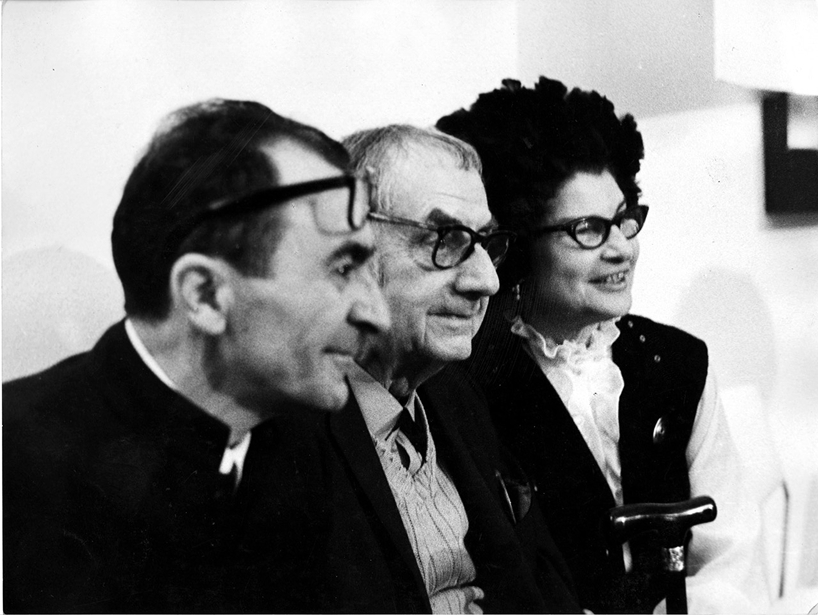
1969, S. Lazzaro (photo: F. De Col Tana) / Image courtesy of Cassina ixc.
Credits
BUNDLE ARTICLE No.003
Direction: Masato Kawai
Text: Kaoru Tashiro (Article, Interviews, Relationship Chart, Chronology)
Editing: Yoshinao Yamada
Design: Jacopo Drago
Cooperation:
Artek
Cassina ixc.
FLOS JAPAN
Fujitani Shouten
Gallery Cellar
Galerie Saint Guillaume
Knoll Japan
LYNN INKOOP
METROCS
POST
SOMEWHERE TOKYO
UNDERGROUND
発行
BUNDLE GALLERY
278-0037 千葉県野田市野田57
https://bundlestudio.jp
Unauthorized reproduction or duplication of articles, photographs, or other content is strictly prohibited.

