

To risk a stereotype, Dino Gavina was, in many ways, the embodiment of Italian spirit—driven by instinct, intuition, and a deeply human approach to entrepreneurship. At the same time, it seems that no other entrepreneur in Italy since has been driven by such an impulsive passion for design as he was.
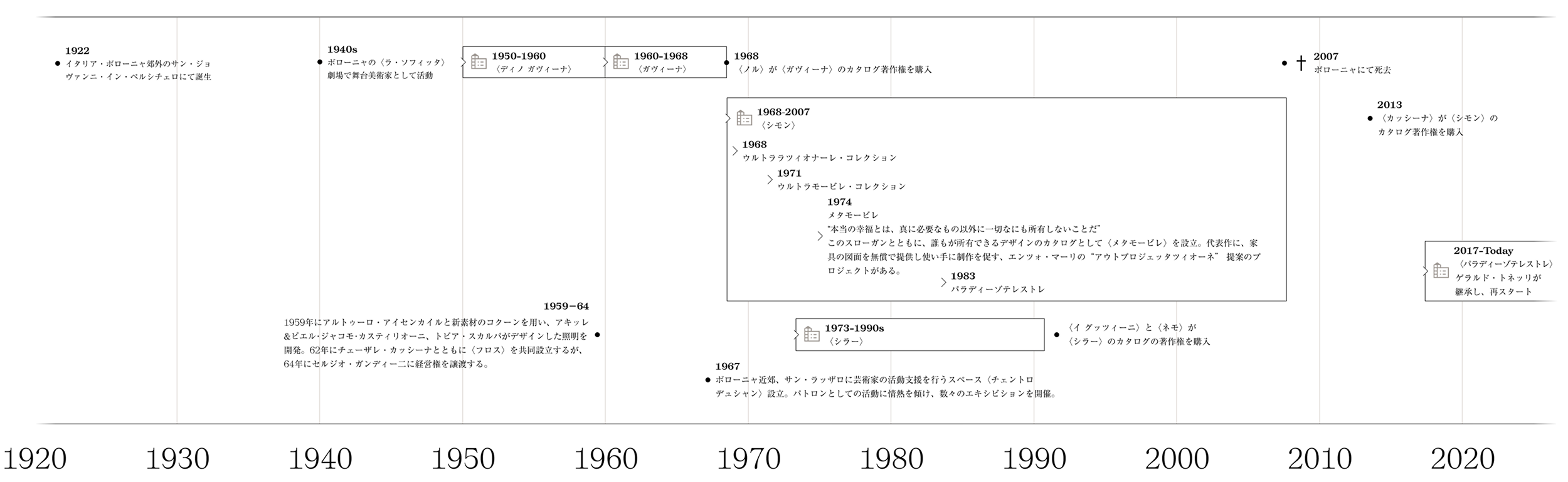
Born in 1922 in San Giovanni in Persiceto, a town just outside Bologna, Gavina’s 100th anniversary was celebrated in 2022 with exhibitions and conferences across Italy. It was an occasion for many to pause and ask, once again: who was Dino Gavina?
He began his career in the postwar era, at a time when the word "design" was not yet in common use in Italy, and architects handled the “progettazione” of objects in a spatially integrated manner. Gavina not only became active in Europe but also developed deep ties with Japan. His legacy sparked cultural cross-pollinations that ripple through modern design history. Though we may only be able to outline a faint silhouette of his legacy, that silhouette itself is a vital part of Italian modern design history.
His story survives in the memories of those who worked alongside him—and in the archives they left behind.
As a young man, Gavina was passionate about stage design. After World War II, in 1950, he founded Dino a Gavina in Bologna and began handling furniture. The first piece he sold was the Tripolina, a masterpiece of anonymous design that combined a steel rod frame with leather or canvas seating. Two years later, he introduced a version using wooden frames. Later, on the advice of architect Pier Giacomo Castiglioni—renowned for his keen ability to discern the intelligence of objects—he added the Cavalletto, a redesigned carpenter’s workbench leg, to his catalog.
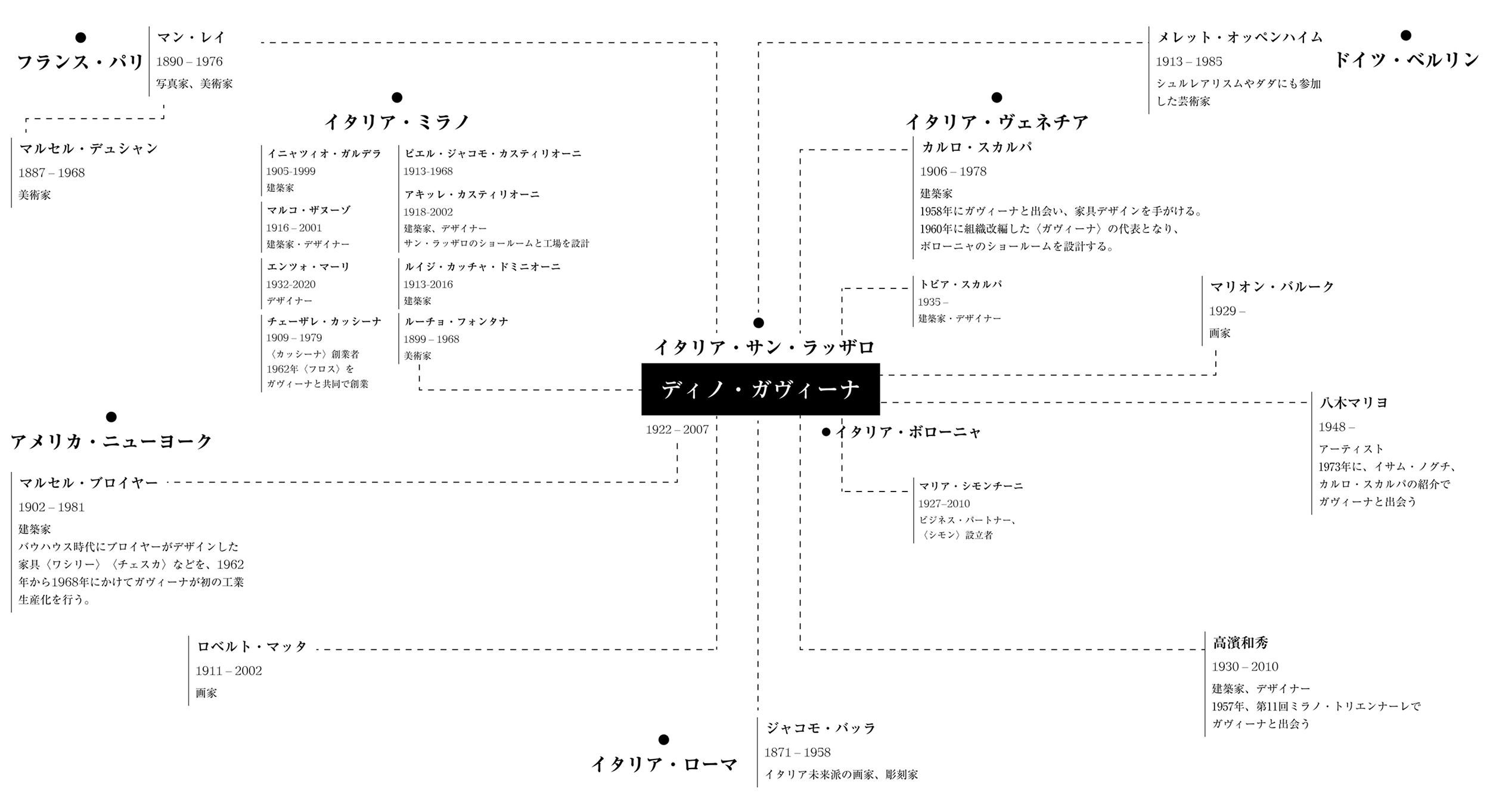
But these were only the beginning. A defining moment came in 1954, when Gavina met artist Lucio Fontana. “Fontana led me to the path of design,” Gavina would later say. Fontana brought him into his inner circle at the Milan Triennale, establishing a lifelong network that would define Gavina’s creative orbit.At the time, Italian“progettazione”was largely architect-led. Gavina collaborated with some of the most important figures of the era, including Tobia Scarpa (Pigreco, 1959), Ignazio Gardella (Digamma, 1957), and the Castiglioni brothers (Ierna, 1959). And another central figure in this story was Japanese architect Kazuhide Takahama.
In 1957, Takahama was part of the team designing the Japan Pavilion for the Milan Triennale. It was there that he met Gavina, and the connection was instant. That same year, Gavina released the Naeko seating series, designed by Takahama. Takahama’s project became the first piece of furniture “industrially” produced by Gavina, ahead of any Italian architect’s work.
Though Takahama returned to Japan for a time, he came back to Bologna a few years later and resumed his collaboration with Gavina, leaving behind many outstanding works.
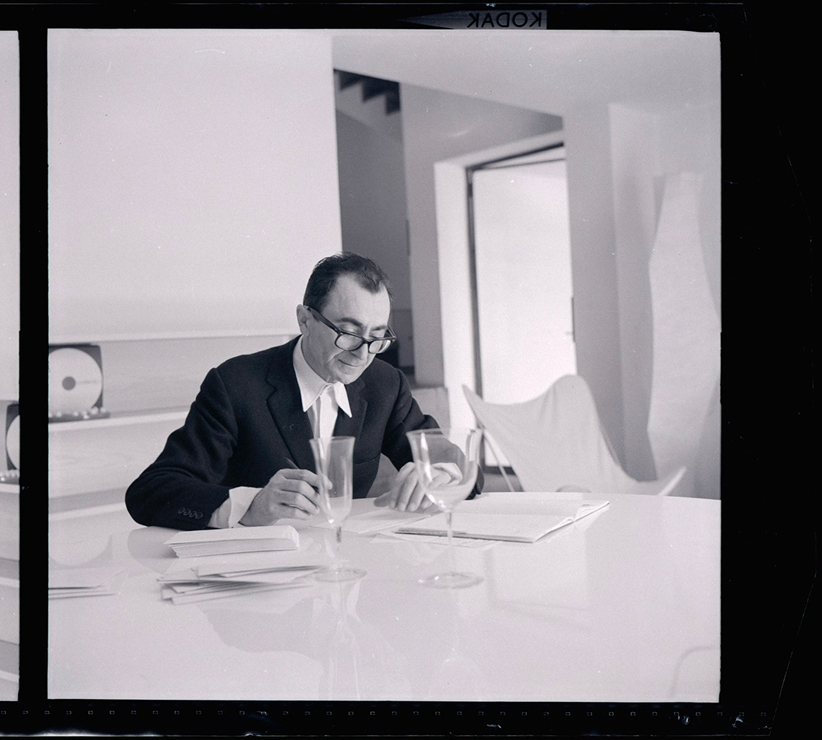
© Centre Pompidou, mnam-cci, Dist. rmn-Grand Palais / Image Centre Pompidou, mnam-cci / distributed by amf
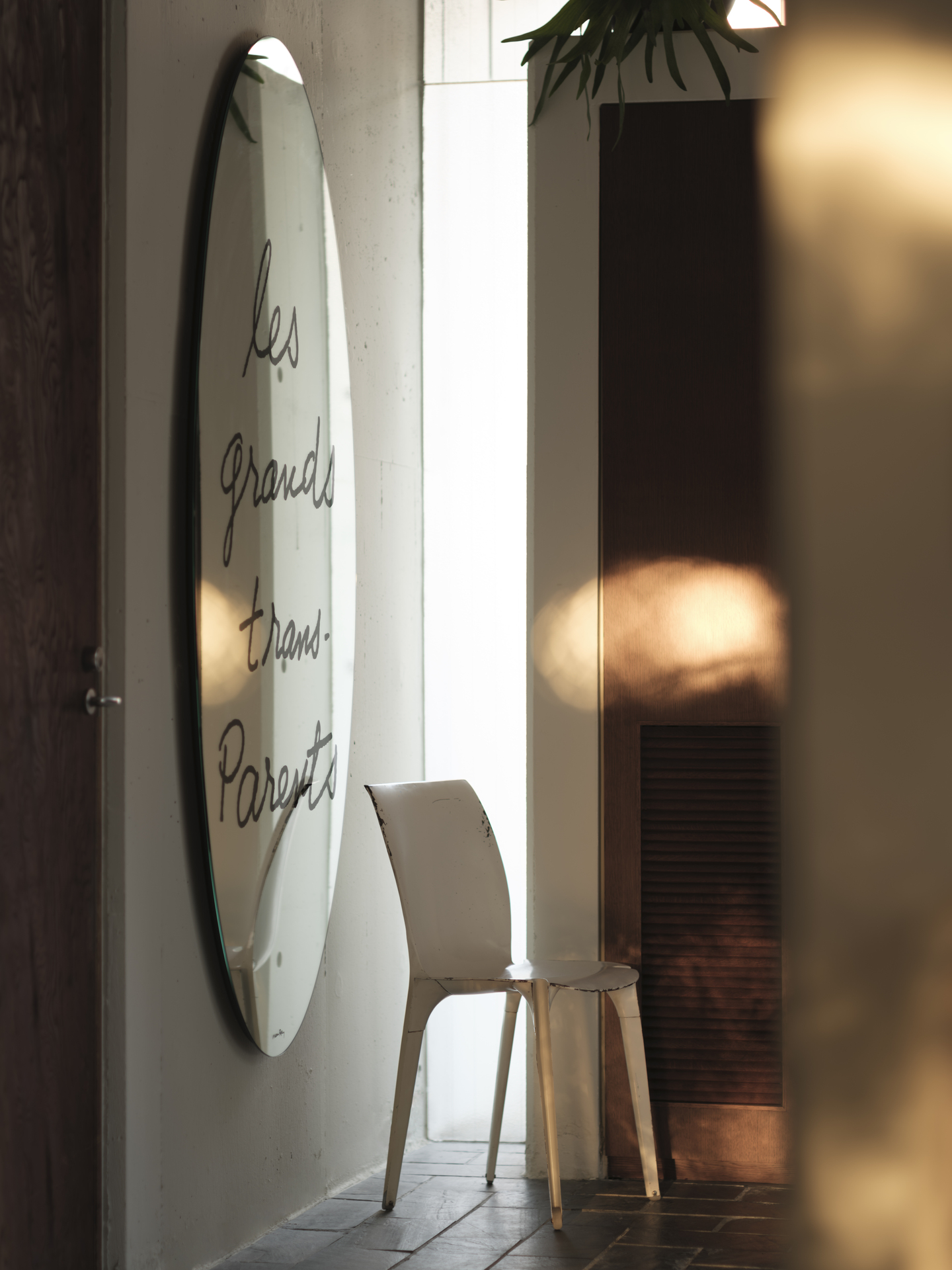
© man ray 2015 trust / adagp, Paris & jaspar, Tokyo, 2023 x0185
The Most Emotional and Intuitive Entrepreneur: Gavina in the 1960s
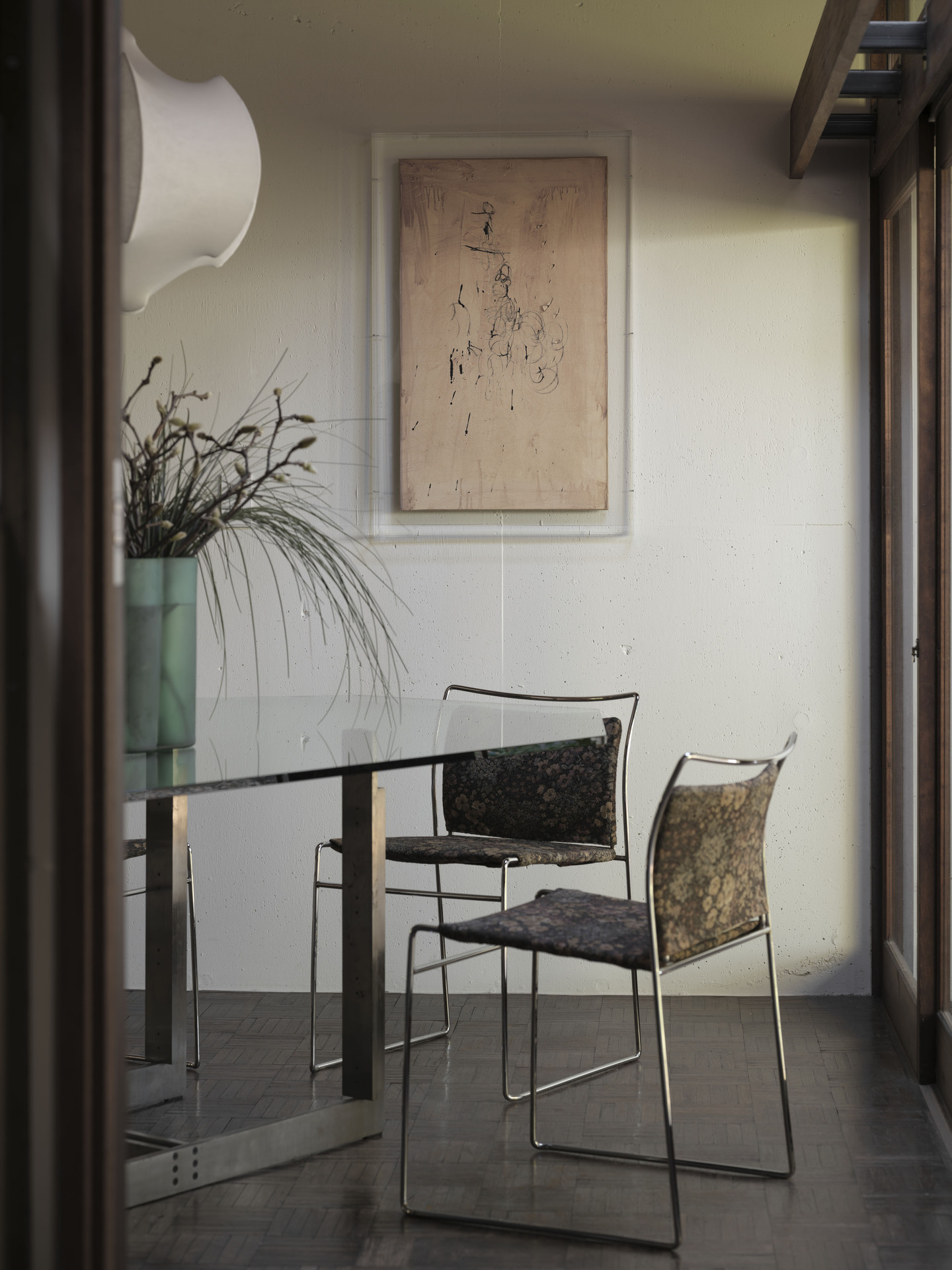
As his business expanded, Dino Gavina formally incorporated his company in 1960, renaming it Gavina and moving steadily toward industrial production. IIt is a surprising fact that he appointed architect Carlo Scarpa—whom he had met in 1958—as the company’s representative. At the time, Scarpa was far from the architectural mainstream and appreciated only within a small circle. Yet Gavina recognized the brilliance of this solitary figure and remained his lifelong friend. Scarpa would later design furniture for the first time under the newly founded Simon, creating masterpieces such as the Doge table (1968).
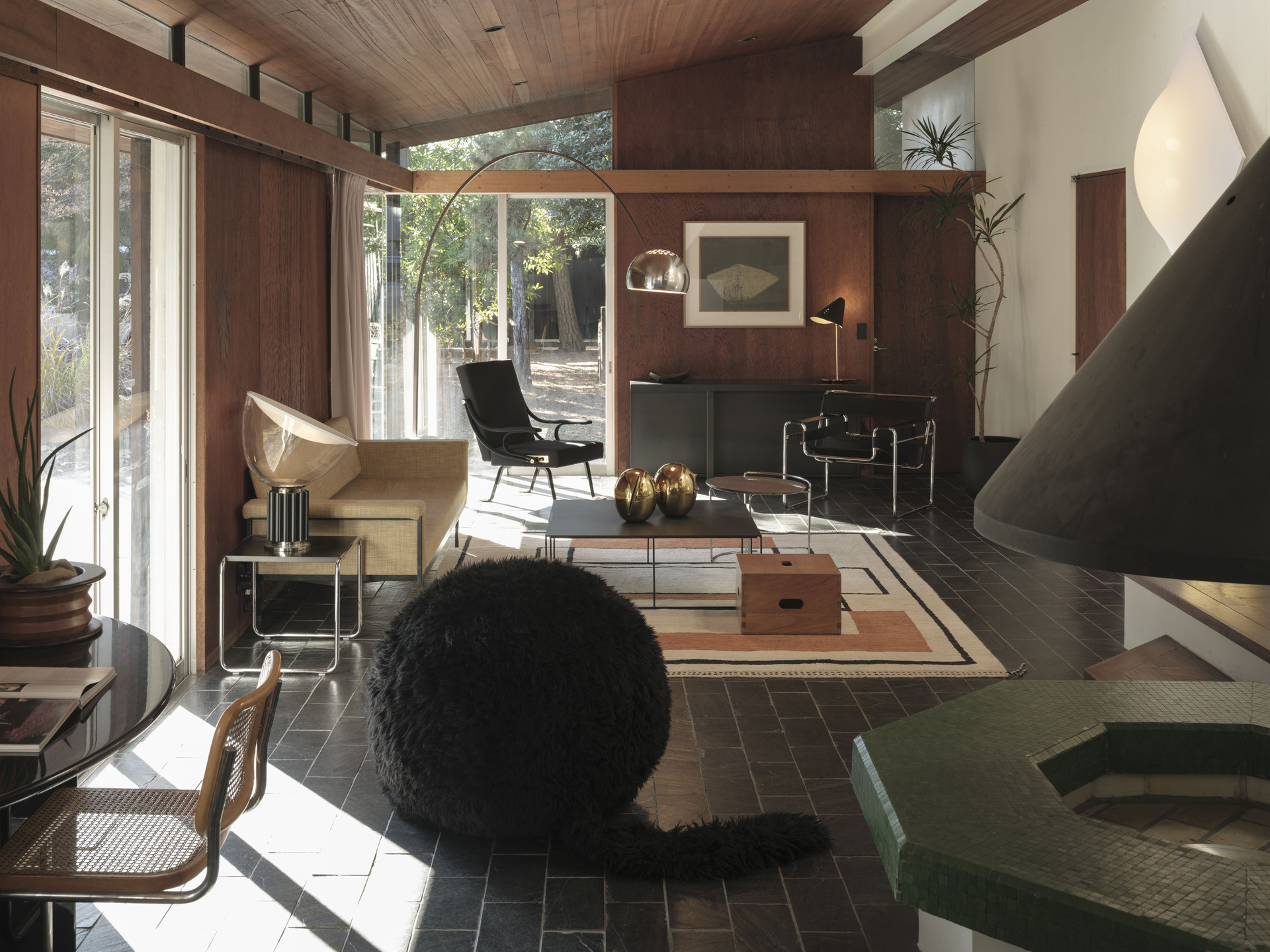
During this decade, Gavina made bold moves in pursuit of the core of modern design. He traveled to New York, knocked on the door of Marcel Breuer’s studio, and asked to take on the industrial production of the Bauhaus master’s iconic works. The result was the Wassily and Cesca chairs, brought into production in 1962 and finally realized as products nearly four decades later. Breuer, recalling the sudden visitor who spoke neither English nor German, affectionately described Gavina as “the most emotional and intuitive man” in the field—and the two became friends.
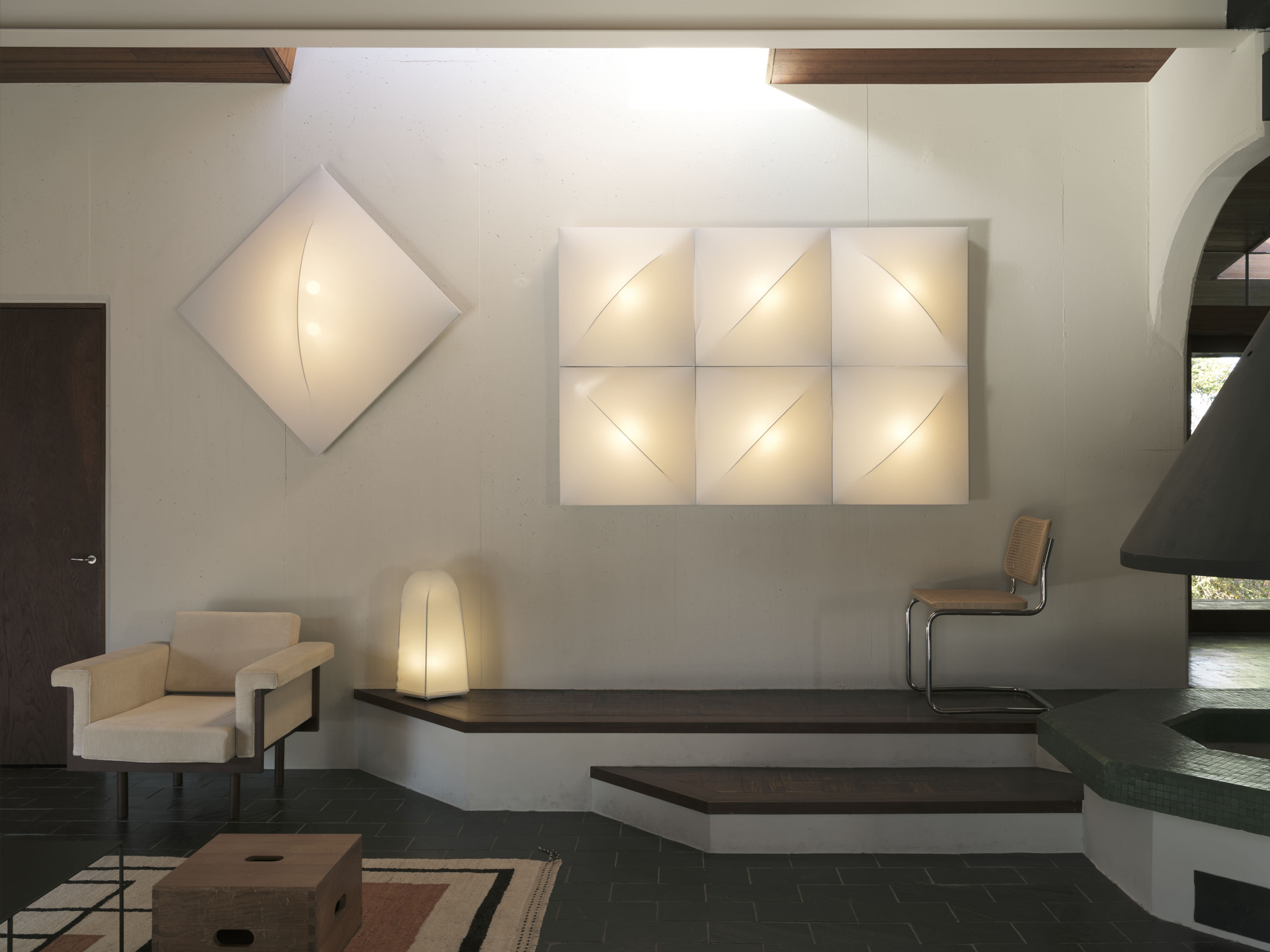
Around the same time, Gavina joined forces with Cesare Cassina, co-founder of the long-established Italian furniture company Cassina, to launch a lighting brand that would meet the demands of modern design. Together, they founded Flos. Though ownership passed to the Gandini family in 1964, Flos would go on to produce enduring classics such as the Viscontea and Arco lamps.
Gavina continued to pursue daring ventures through the late 1960s, but a turning point came. Whether it was a loss of interest—he later said he felt there was “nothing essentially new left to add”—or managerial difficulties, he closed the company in 1968. It was Scarpa, along with friends like Maria Simoncini, who revived his spirit. Gavina’s vision would carry on through Simon.
At Simon, Gavina launched the brand Ultrarazionale, a name that signaled his desire to “move beyond rationalism, or break free from the constraints of modernism” as the 1970s approached. That Carlo Scarpa’s designs—poetic and distinct from the prevailing architectural trends—became the defining works of the collection is no coincidence.
Gavina’s Other Adventure:
Can Art and Design Truly Live Together in Everyday Life?
While Gavina’s creative output is too vast to contain in a single narrative, one element that cannot be overlooked is his deep connection to the world of art. At the heart of this relationship was Man Ray. Gavina’s daughter, Ilka Alessandra, remembers:
“My father was completely instinct-driven. He had an endless curiosity, and when someone captured his interest, he would do everything possible to meet them and build a relationship. His friendships with artists like Lucio Fontana and Man Ray were absolutely essential. He once showed up uninvited at Man Ray’s studio in Paris—initially turned away, but ultimately welcomed in. They became the closest of friends.”
It was through Man Ray that Gavina came into contact with Marcel Duchamp, who was virtually unknown in Italy at the time. In 1963, he organized the exhibition Marcel Duchamp: Readymades at his showroom in Rome—with display design by none other than Carlo Scarpa. Though Duchamp was known for his reserved nature, a photo from the opening captures him lounging in Breuer’s Wassily chair, smiling alongside Gavina and his circle. Duchamp reportedly described it as “the best exhibition I’ve ever had.” Whether the Castiglioni brothers—pioneers in translating the readymade concept into design—were present remains uncertain.
Never satisfied with limiting himself to furniture design, Gavina also became a prolific organizer of art exhibitions. In 1971, just shy of his fiftieth birthday, he launched another bold initiative: Ultramobile. This project sought to merge art and utility, bringing “functional” art into everyday living spaces. Collaborators included Man Ray, Duchamp, René Magritte, Roberto Matta, and Meret Oppenheim. The collection even featured a folding screen based on original sketches by Futurist artist Giacomo Balla—resulting in a richly layered, eclectic body of work.
As Gavina once wrote:
“With Marcel Breuer, the industrial production of furniture became culture; with Ultramobile, poetry was brought into it.”
Who Is the Subversive?
A Story About a Legendary Business Card
One last story worth telling is about a business card—now a piece of Gavina lore.
Front: Dino Gavina – Subversive (sovversivo)
Back: “Truth? There’s nothing more subversive.” – Man Ray
No address.
Ilka Alessandra, his daughter, says simply, “It captures exactly who he was.”But why subversive? What did he tear down, and what did he make possible?
In the upheaval of the postwar era, the idea of infusing industrial production with beauty through design could itself be seen as a radical act—something born of disruption. Gavina tilled the soil of a new era, resurrecting forgotten pieces, elevating anonymous objects, and laying the groundwork for a fresh design vocabulary. He went even further, boldly merging the worlds of design and art. And yet, Gavina would never have called himself a “creator.”
From the perspective of Italian history, the entire concept of “design” is just a spark in the vast timeline of human making. Gavina destroyed in order to create—but he also understood that what is created must one day be dismantled. It’s through this cycle that the work he and his collaborators shaped has reached us.
The rise of Italian design was not the work of individuals, but of shared vision—of entrepreneurs like Gavina and the architects and designers who joined him with passion, sensibility, and a belief in beauty. Together, they carried within them a dream of a utopia not yet realized.
Gavina’s final endeavor bore the name Paradisoterrestre—an earthly paradise.And still, across time, his call echoes: act. He’s not done pulling us in.
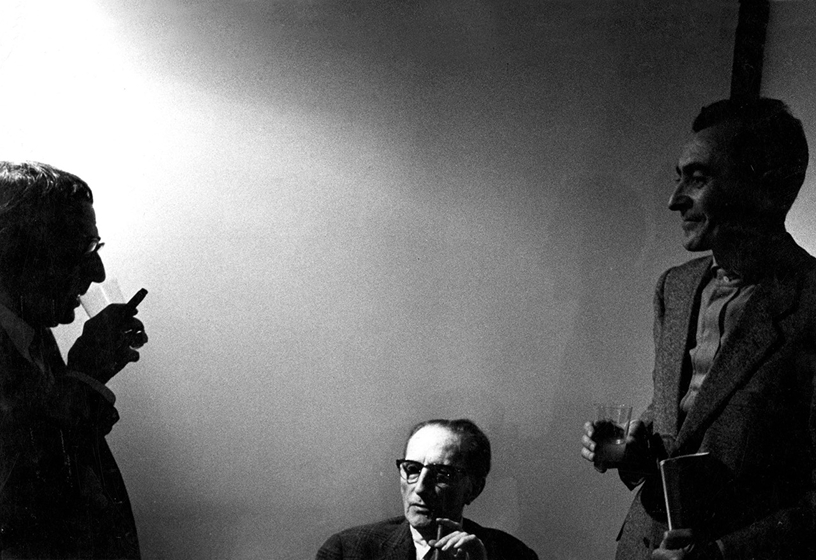
1966, Paris (photo: F. De Col Tana) / Image courtesy of Cassina ixc.


Credits
BUNDLE ARTICLE No.003
Direction: Masato Kawai
Text: Kaoru Tashiro (Article, Interviews, Relationship Chart, Chronology)
Editing: Yoshinao Yamada
Design: Jacopo Drago
Cooperation:
Artek
Cassina ixc.
FLOS JAPAN
Fujitani Shouten
Gallery Cellar
Galerie Saint Guillaume
Knoll Japan
LYNN INKOOP
METROCS
POST
SOMEWHERE TOKYO
UNDERGROUND
発行
BUNDLE GALLERY
278-0037 千葉県野田市野田57
https://bundlestudio.jp
Unauthorized copying, reproduction, or redistribution of the articles, photographs, or other content in this booklet is strictly prohibited.